 Spot Startups
10 Common Mistakes Founders Make When Submitting Their Startup to Directories
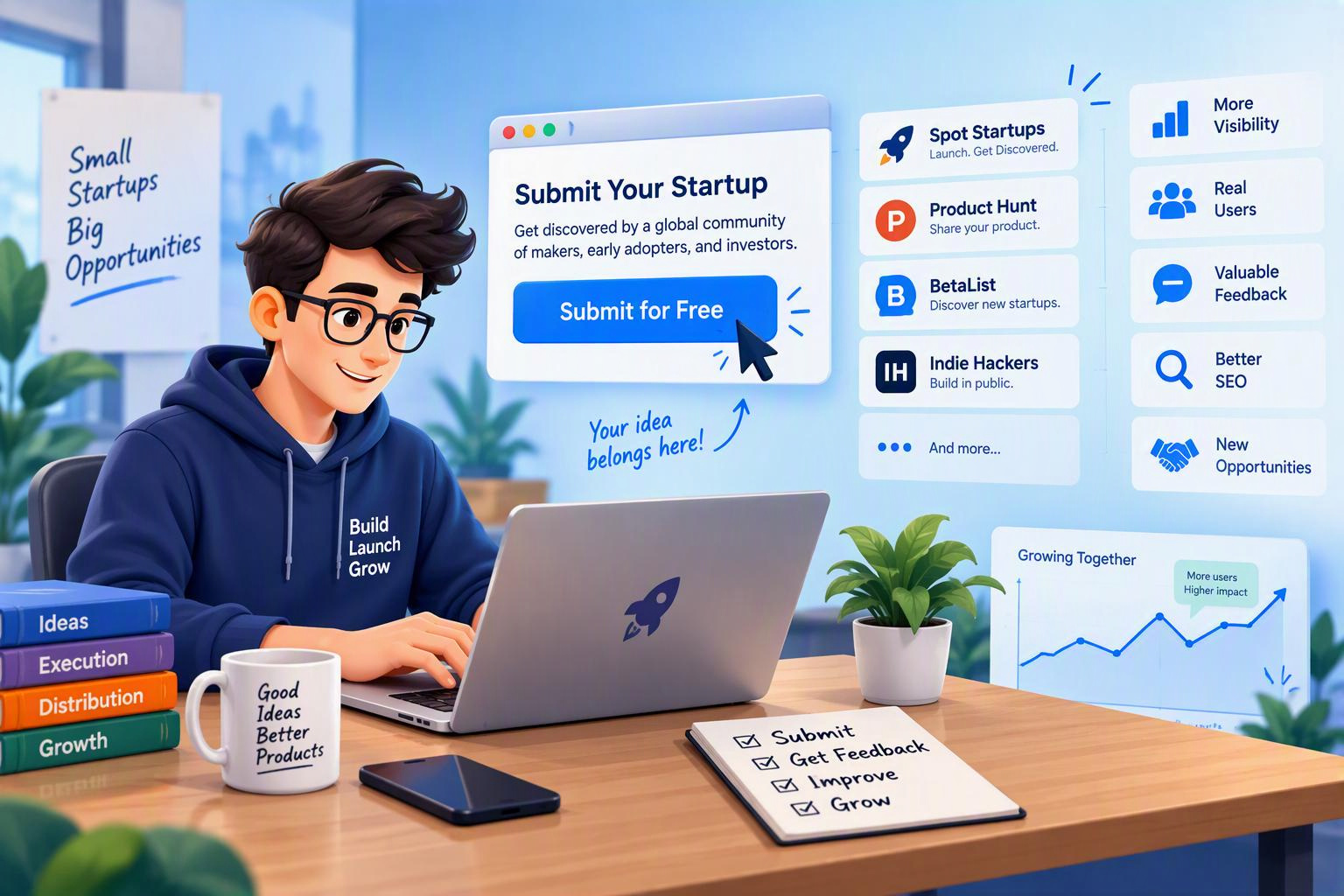
Startup directories are one of the simplest ways to get your product in front of potential users, investors, early adopters, and industry professionals. Whether you're launching a SaaS platform, AI tool, mobile app, or marketplace, directory listings can help increase visibility, generate traffic, and build valuable backlinks.
However, many founders make the mistake of thinking that success comes from submitting a startup and waiting for results. In reality, the quality of your submission and the strategy behind it often determine whether your listing attracts attention or gets overlooked.
In this article, we'll examine the ten most common mistakes founders make when submitting their startups to directories and explain how to avoid them.
Why Startup Directories Matter
Before diving into the mistakes, let's look at why startup directories continue to be valuable growth channels.
Benefits of Startup Directories
- Increase product visibility
- Reach potential customers actively looking for new tools
- Generate early user feedback
- Build online credibility
- Earn valuable backlinks
- Improve search engine visibility
- Create opportunities for partnerships and collaborations
The most successful founders treat directory submissions as part of a broader growth strategy rather than a one-time marketing task.
1. Submitting Before the Product Is Ready
One of the biggest mistakes founders make is launching too early.
A startup listing may attract hundreds of visitors within the first few days. If those visitors encounter broken pages, missing features, or confusing messaging, the opportunity may be lost.
Common Issues
- Landing pages still marked "Coming Soon"
- Broken signup flows
- Missing screenshots
- Unclear product positioning
- Poor mobile experience
Best Practice
Before submitting your startup:
- Test every major user flow
- Verify contact forms
- Review mobile responsiveness
- Ensure your value proposition is immediately clear
Remember, first impressions matter.
2. Writing a Generic Product Description
Many startup descriptions sound nearly identical.
Examples include:
"AI-powered platform for productivity."
"Innovative solution for businesses."
These descriptions tell users very little about what the product actually does.
Instead, Answer Three Questions
- What problem does the product solve?
- Who is it for?
- Why is it different?
Weak Example
"AI-powered productivity platform."
Strong Example
"An AI meeting assistant that converts meeting notes into actionable tasks and automatically tracks completion."
The more specific your description, the easier it becomes for users to understand your value.
3. Ignoring the Thumbnail, Logo, and Screenshots
Visuals can significantly impact click-through rates.
When visitors browse directories, they often scan logos, screenshots, and headlines before reading descriptions.
Poor visuals can make even an excellent product appear unfinished.
Common Visual Mistakes
- Low-resolution logos
- Inconsistent branding
- Generic stock imagery
- Screenshots without context
- Too many screenshots showing the same screen
What Good Visuals Include
- Clean, recognizable logo
- High-quality screenshots
- Product interface highlights
- Clear display of core features
- Consistent brand colors
Best Practice
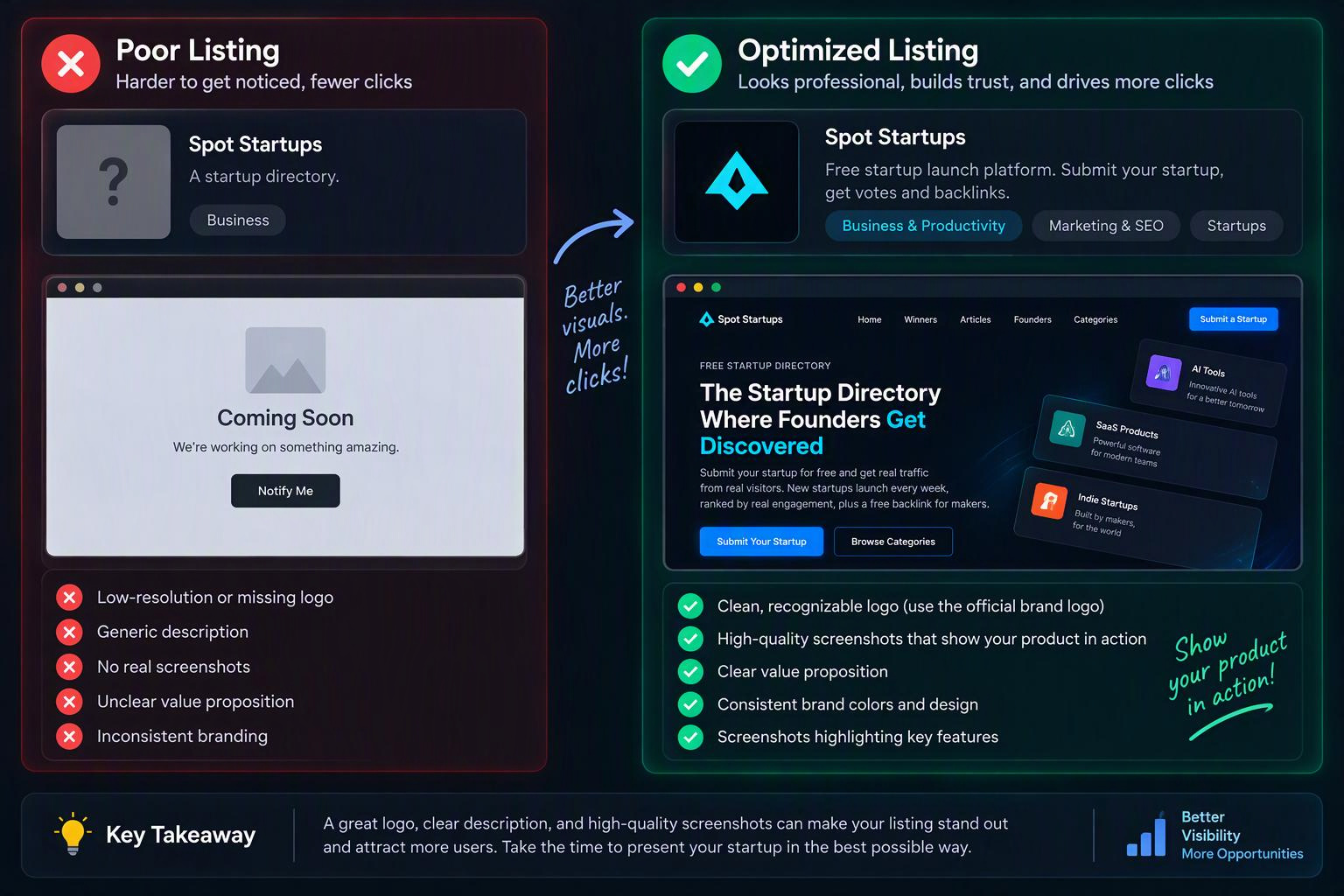
Show the product in action.
Don't just display your dashboard. Demonstrate how users benefit from using your solution.
4. Choosing the Wrong Category
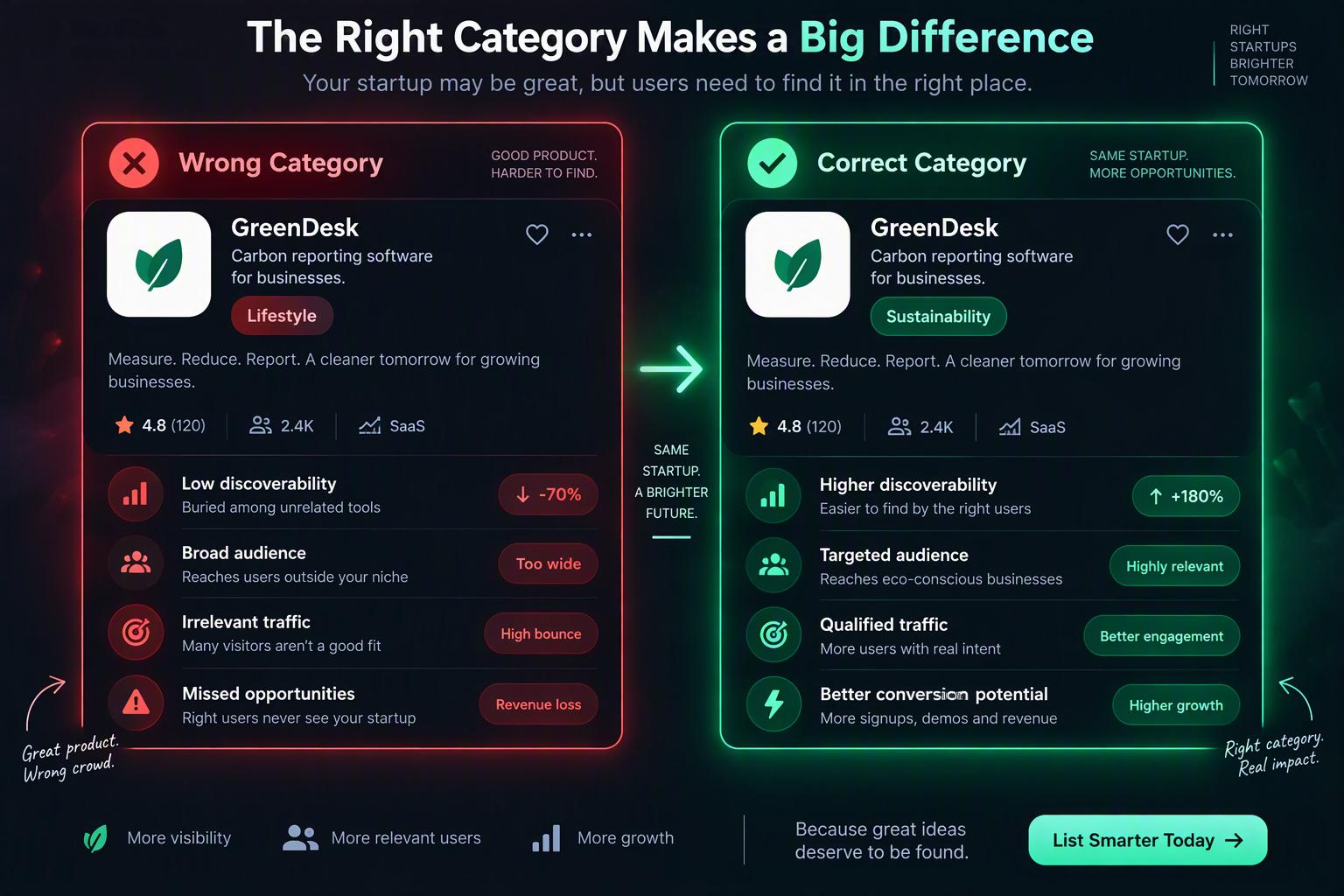
Categories influence discoverability.
Even a great startup can struggle if it appears in the wrong section of a directory.
Real Example
A carbon tracking platform listed under:
- Lifestyle
Instead of:
- Sustainability
- Climate Tech
- Business Tools
This makes it harder for the right users to find the product.
How to Choose the Right Category
- Identify your primary use case
- Consider your target audience
- Review how similar startups are categorized
- Focus on relevance over exposure
Being in the right category often produces higher-quality traffic than appearing in a broader one.
5. Not Optimizing the Listing for SEO
Many founders focus only on users browsing the directory.
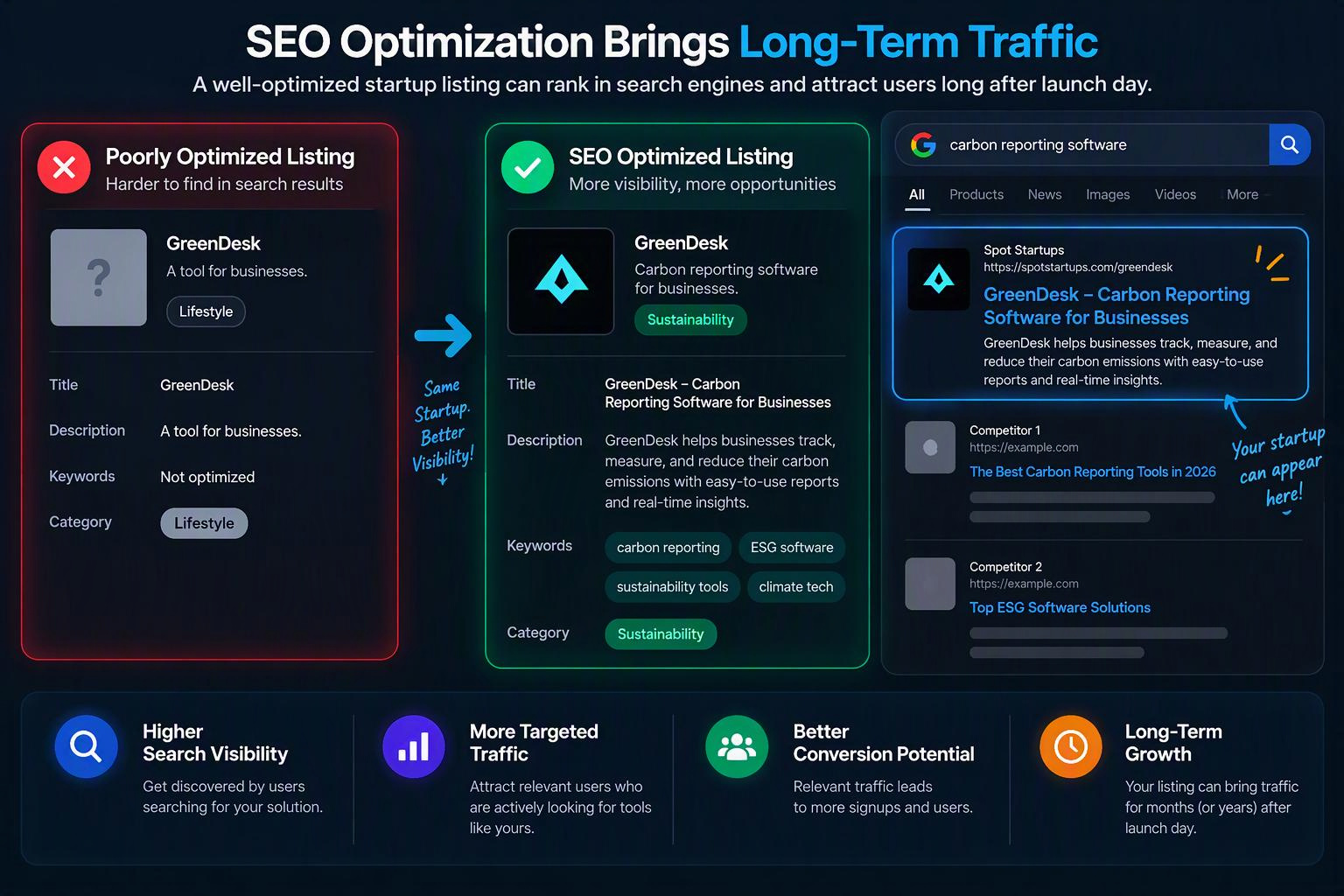
They forget that directory listings can also rank in search results and appear in AI-powered search experiences.
What to Optimize
Startup Name
Use the full brand name consistently.
Headline
Clearly describe the solution.
Keywords
Include phrases users might search for.
Example:
- AI writing assistant
- Email automation software
- Team collaboration platform
Description
Naturally include relevant terms while maintaining readability.
Result
A well-optimized listing can continue attracting traffic long after launch day.
6. Launching Without a Promotion Plan
Submitting is only the beginning.
Many successful launches generate momentum because founders actively promote them.
Where to Share
- X (Twitter)
- Founder communities
- Slack groups
- Reddit communities
- Newsletters
- Existing customer networks
Simple Launch Formula
- Submit startup
- Announce launch
- Encourage supporters to visit
- Collect feedback
- Continue promoting throughout launch week
Founders who actively support their launch generally receive better engagement than those who rely solely on directory traffic.
7. Failing to Engage With Feedback
Feedback is often one of the most valuable outcomes of a directory submission.
Unfortunately, many founders ignore it.
Why That Matters
Users may highlight:
- Bugs
- Missing features
- Confusing workflows
- Pricing concerns
- Requests for improvements
These insights can directly influence product growth.
Best Practice
Respond quickly and professionally.
Even a short response demonstrates that the team is active and invested in user success.
8. Submitting to Only One Directory
Many startups focus exclusively on a single platform.
This limits exposure.
Different directories attract different types of users.
Benefits of Multiple Submissions
- Broader reach
- More backlinks
- Increased referral traffic
- Better SEO visibility
- Larger feedback pool
Think of startup directories as distribution channels rather than isolated destinations.
9. Not Tracking Results
You can't improve what you don't measure.
Many founders have no idea whether their listing generated meaningful results.
Metrics to Track
- Visitors
- Signups
- Activation rate
- Conversion rate
- Referral traffic
- Time on site
- Returning visitors
Useful Questions
- Which directory brought the most traffic?
- Which directory produced the most signups?
- Which audience converted best?
These insights help guide future marketing investments.
10. Never Updating the Listing
Your startup evolves.
Your directory listing should evolve too.
Common Updates
- New features
- Product redesigns
- Pricing changes
- Case studies
- Customer testimonials
- New screenshots
An outdated listing may create confusion and reduce trust.
Best Practice
Review important directory listings every few months and keep them current.
Startup Directory Submission Checklist
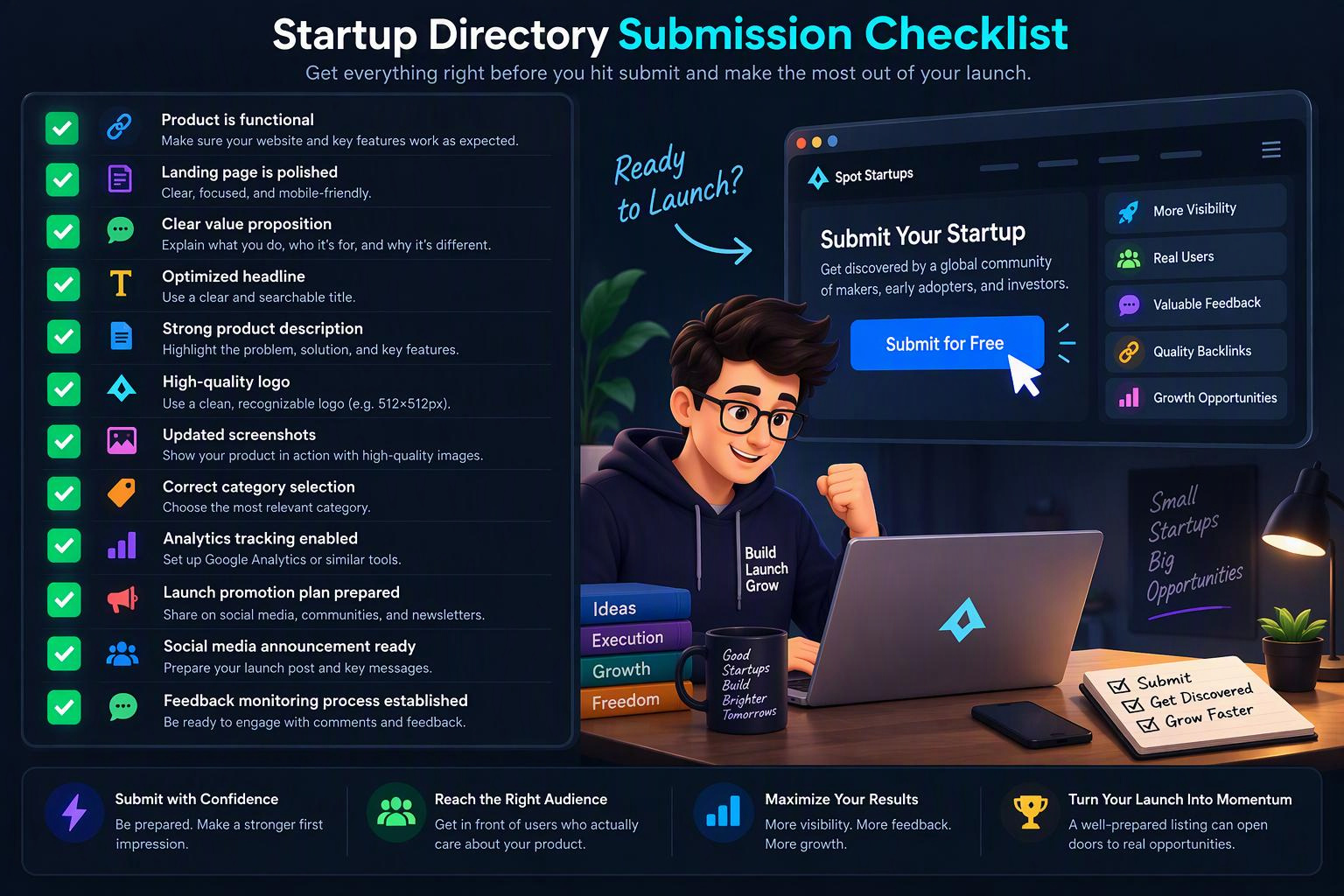
Before you submit your startup, verify that you've completed the following:
✅ Product is functional
✅ Landing page is polished
✅ Clear value proposition
✅ Optimized headline
✅ Strong product description
✅ High-quality logo
✅ Updated screenshots
✅ Correct category selection
✅ Analytics tracking enabled
✅ Launch promotion plan prepared
✅ Social media announcement ready
✅ Feedback monitoring process established
Submitting your startup to directories can be an effective and affordable way to increase visibility, attract users, and build authority. However, success rarely comes from simply filling out a form.
The founders who get the best results focus on preparation, positioning, strong visuals, promotion, measurement, and continuous improvement.
Avoiding these ten mistakes will give your startup a better chance of standing out, attracting the right audience, and turning directory traffic into long-term growth.
The next time you submit your startup, don't think of it as a listing. Think of it as a product launch.
Frequently Asked Questions
1. What is a startup directory?
A startup directory is a platform where founders can submit and showcase their products to gain visibility, attract users, collect feedback, and earn backlinks. Popular examples include Product Hunt, BetaList, and Spot Startups.
2. Why should I submit my startup to directories?
Startup directories can help you:
- Reach early adopters
- Increase brand awareness
- Generate referral traffic
- Earn SEO backlinks
- Collect user feedback
- Improve product discoverability
For many early-stage startups, directories provide one of the fastest ways to get initial exposure.
3. How many startup directories should I submit to?
Instead of relying on a single platform, consider submitting to multiple relevant directories. Different directories attract different audiences, which can increase your overall visibility and traffic.
4. When is the best time to submit a startup?
The best time is when:
- Your product is functional
- Your website is polished
- Your onboarding flow works smoothly
- You have promotional content ready
Avoid launching with incomplete features or "coming soon" pages.
5. What information should I prepare before submitting?
Most startup directories require:
- Startup name
- Logo
- Product description
- Website URL
- Screenshots
- Category selection
- Founder information
- Social links
Having these assets prepared can significantly improve the quality of your listing.
6. Do startup directories help with SEO?
Yes. Many directories provide backlinks and additional brand mentions that can help search engines discover and understand your product. Well-optimized listings can also appear directly in search results for relevant keywords.
7. How do I write a good startup description?
A strong description should clearly explain:
- What the product does
- Who it helps
- What problem it solves
- Why it's different from alternatives
Avoid generic phrases like "AI-powered platform" without explaining the practical benefit.
8. How important are screenshots in a startup listing?
Very important. Screenshots help visitors quickly understand your product and can significantly influence whether someone clicks through to your website.
Focus on showing:
- Key features
- Product workflows
- Real use cases
- User interface highlights
9. What category should I choose for my startup?
Choose the category that best matches your primary use case and target audience.
A common mistake is selecting a broad category simply because it seems more popular. Relevant categories usually generate better-quality traffic and higher conversion rates.
10. How can I get more visibility after submitting my startup?
Promote your listing through:
- X (Twitter)
- Founder communities
- Slack groups
- Reddit communities
- Newsletters
- Existing customers and supporters
The most successful launches combine directory submissions with active promotion.
11. How do I measure whether a directory submission is successful?
Track metrics such as:
- Referral traffic
- Signups
- Conversion rate
- Demo requests
- Product activations
- Customer feedback
This helps identify which directories deliver the best results.
12. Is Spot Startups free to use?
Yes. Spot Startups allows founders to submit startups for free, helping them gain visibility, traffic, feedback, and a backlink while reaching a community of makers and early adopters.