 Spot Startups
How to Launch a Startup With Zero Audience (Step-by-Step)

TL;DR: You don't need followers to launch, you need a sequence. Write a one-sentence pitch, submit to 5–8 startup directories in a staggered order (not all on day one), engage every comment within the first hour, then reuse that traffic to build your actual audience for the next launch. Most zero-audience founders get their first real users within [X] days of a well-sequenced directory launch, not from ads or social posts.
Most first-time founders think they need an audience before they can launch. They don't. They need a process that manufactures visibility on demand and that process is directory sequencing, not follower count.
Here's the exact playbook.
What's the fastest way to launch a startup with no audience?
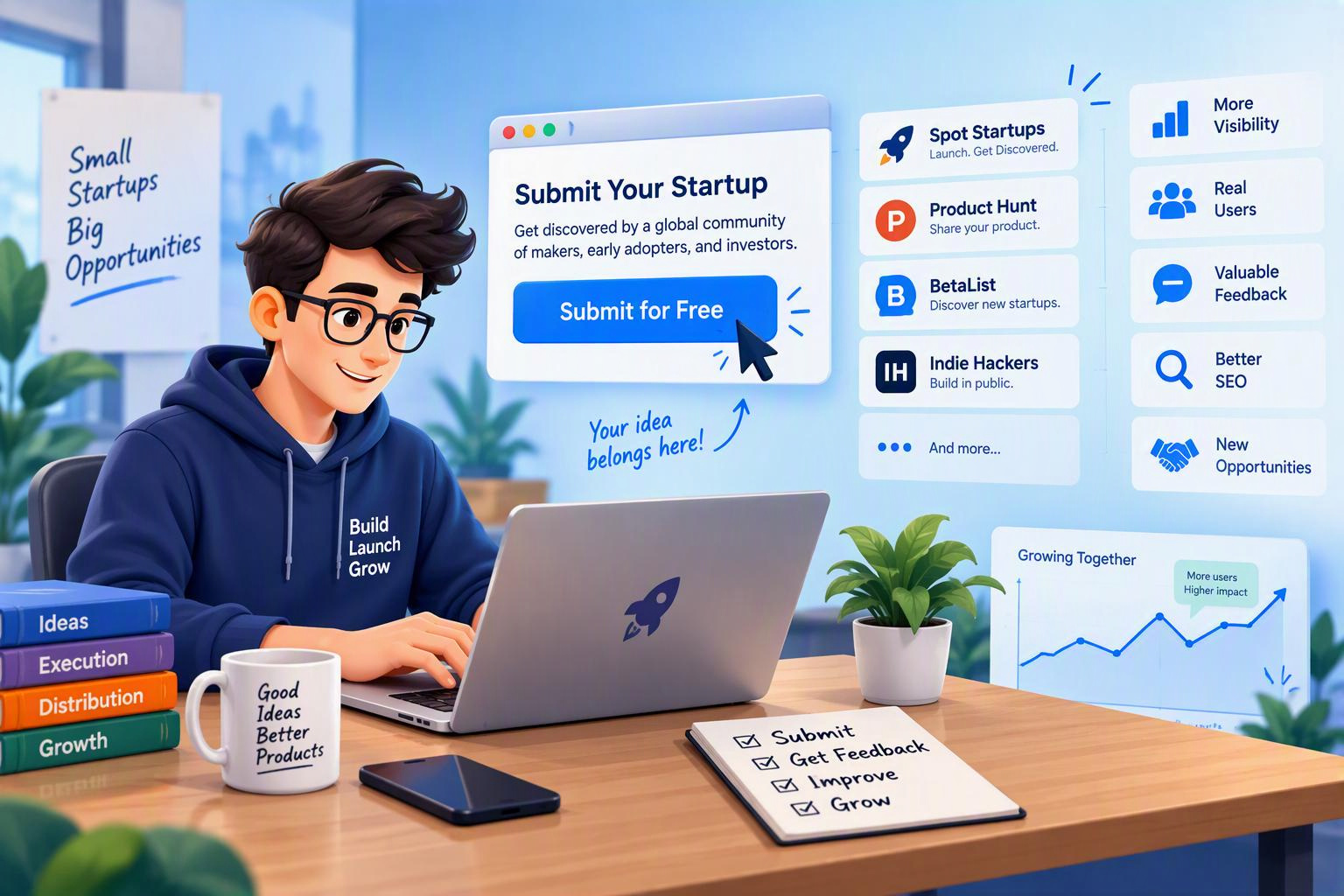
The fastest way is submitting to multiple curated startup directories in a deliberate sequence over 1–2 weeks, rather than dumping your product on every platform in a single day. Directories like Product Hunt, Spot Startups, and niche category directories act as your audience substitute they already have the early adopters, makers, and testers you don't have yet. Your job is to show up with a listing tight enough that their audience becomes yours.
This works because you're borrowing distribution instead of building it from scratch, which is the only realistic option when you're starting at zero.
Step 1: Write your one-sentence pitch before anything else
Before you touch a single directory, nail this sentence:
[Product] helps [specific audience] [achieve outcome] without [the usual pain point].
Example: "Spot Startups helps indie founders get their first users without spending on ads."
If you can't fill in all four blanks specifically, your listing will read like every other generic SaaS blurb and directories are visual scanning environments. People decide in about 2 seconds whether to click.
Step 2: Build one launch asset, not five
You need exactly one strong asset: a screenshot, GIF, or 20-second demo video showing the product doing the thing it claims to do. Not a logo. Not a landing page screenshot. The actual product, in motion, solving the actual problem.
Directories and their audiences are pattern-matching for "is this real" a working demo answers that instantly. A polished logo does not.
Step 3: Pick your directory sequence don't launch everywhere on day one
This is the part almost everyone gets wrong. Submitting to 10 directories simultaneously fragments your traffic and your ability to respond to comments and engagement in the first hour is what determines whether a directory's algorithm pushes you further.
A better sequence:
| Week | Action | Why |
|---|---|---|
| Week 1, Day 1 | Launch on your strongest-fit directory (most relevant category, most engaged audience) | Concentrates early engagement where it counts most |
| Week 1, Day 3–4 | Launch on a second directory, referencing early traction from the first ("already at X upvotes/signups") | Social proof compounds |
| Week 2 | Launch on 2–3 smaller, niche-specific directories | Long-tail traffic + backlinks, lower competition for attention |
Step 4: Engage every comment in the first hour, no exceptions
The first hour after a listing goes live is when directory algorithms (and human moderators) decide whether your launch is "alive" or ignorable. Reply to every comment, even the low-effort ones. This isn't optional politeness it's the single highest-leverage 60 minutes of your entire launch.
Step 5: Capture the traffic before it disappears
A launch spike is temporary. Your job is converting it into something permanent:
- Add an email capture on your landing page before you launch, not after
- Ask early users for one specific piece of feedback (not "thoughts?" ask "what almost stopped you from signing up?")
- Screenshot your best comments and testimonials immediately you'll reuse them in your next launch
Do startup directories actually help SEO?
Yes, with a caveat: directory backlinks help most when the directory itself is indexed, maintained, and has real traffic — not when it's a dead list nobody visits. A backlink from an active directory contributes to domain authority and can drive direct referral traffic; a backlink from an abandoned one does close to nothing. Prioritize directories that show recent activity (new listings within the last few days) over ones with large but stale archives.
How many directories should you actually submit to?
For a first launch, 5–8 directories spread across 1–2 weeks is enough. More than that and you dilute your ability to engage meaningfully with each community, which is the actual growth lever not the raw number of listings. If you have already created your startup or planning to start a new check out the Startup Launch Checklist which I have created for free use.
FAQ
How do indie hackers get their first 100 users with no marketing budget?
Mostly through staggered directory launches combined with direct engagement in the comments of each listing not paid ads. The first 100 users typically come from borrowed audiences, not owned ones.
Is it worth submitting to multiple startup directories?
Yes, as long as you sequence the submissions rather than launching on all of them the same day. Sequencing lets you use momentum from earlier launches as social proof in later ones.
What should I do right after my startup goes live on a directory?
Reply to every comment within the first hour, and make sure your landing page has an email capture so you keep the traffic even after the launch spike fades.
Do I need social media followers to launch a startup successfully?
No. Directories exist specifically to give early-stage founders access to an audience they haven't built yet. Followers help, but they aren't a prerequisite.